



























China Emotional Consumption 2025: Trends & Brand Strategy
Emotional consumption has rapidly become one of the most influential forces shaping China’s consumer market. As consumers shift from functional needs to emotional value, brands are competing not only on product features, but on the ability to deliver comfort, validation, identity, and emotional resonance.
This article summarises key findings from the “2025 China Emotional Consumption Market Insight Report” — helping global and regional brands understand how these trends shape advertising, content, and digital strategies in Mainland China.
1.0 Emotional Consumption Market Overview
Emotional consumption refers to consumers purchasing products or experiences primarily to satisfy emotional needs—such as joy, healing, relaxation, recognition, and self-expression—rather than functional benefits. At its core, the market is shifting from functional value to emotional value.
1.1 Emotional Consumption: Concept & Background
China’s emotional consumption trend is driven by three major forces:
- Consumption Upgrade:As income rises, consumers—especially Gen Z—are willing to pay extra for emotional satisfaction. Over 56%of Gen Z are willing to spend more on products that deliver emotional value.
- Social Pressure & Emotional Release:High stress, fast-paced lifestyles, and loneliness increase the demand for mood-relief purchases. Young adults (18–25) show the highest need for emotional outlets.
- New Generation Mindset:Gen Z prioritises self-expression and “treating themselves.” Many spend over RMB 3,000 monthlyon entertainment, self-care, and mood-based consumption.
1.2 Core Drivers of China’s Emotional Consumption Market
China’s emotional consumption market is shaped by four core driving forces that reinforce each other and form a continuous growth cycle: personal needs, social environment, technology & culture, and market supply.
- Personal Internal Drivers:Consumers turn to spending for emotional comfort, self-expression, and stress relief.
- Social & Environmental Drivers:Social media, peer influence, and ritualised celebrations amplify emotional needs.
- Technological & Cultural Drivers:Digital payments, personalisation algorithms, and shifting cultural values lower barriers and strengthen emotional triggers.
- Market Supply-side Drivers:Brands design emotional products, refine emotional marketing, and build immersive consumption scenarios.
1.3 Market Size & Current Landscape of Emotional Consumption
China’s emotional consumption industry is expanding rapidly, driven by shifting social structures and rising demand for emotional value.
Market Size Forecast
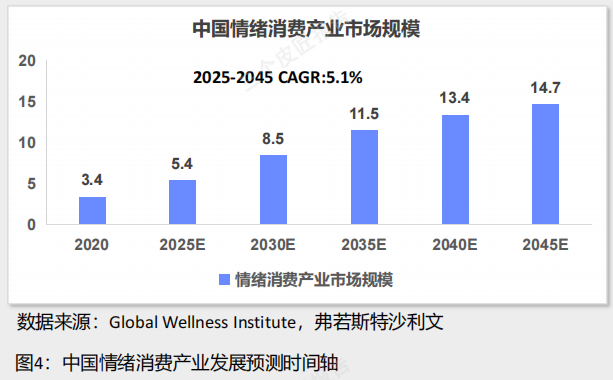
- The market is expected to grow from RMB 340 billion in 2020to RMB 540 billion in 2025, and further reach RMB 1.47 trillion by 2045.
- This represents a 330% increase, with a projected CAGR of 5.1% (2025–2045).
- Emotional consumption is becoming a trillion-yuan “golden track”.
(Screenshot extracted from an industry report)
Four Stages of Market Evolution
- Emerging Stage (2017–2022): Policy and demographic shifts kickstart emotional consumption.
- High-Growth Stage (2022–2034): Emotional needs surge; industries scale quickly.
- Mature Stage (2034–2041): Market stabilizes; structure forms; competition intensifies.
- Saturation/Decline Stage (2041+): Emotional needs diversify; growth pace slows.
2.0 Emotional Consumer Profile & Platform Influence
China’s emotional consumption is no longer niche — it is driven mainly by younger generations, with strong recognition and broad acceptance across age groups.
2.1 Core Segments of Emotional Consumers
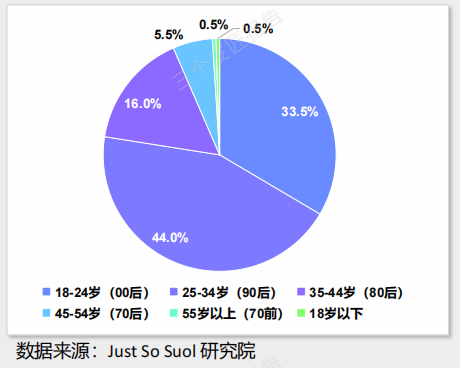
China’s emotional consumption market is led mainly by young adults aged 18–34, who account for over 77% of emotional spending. Their motivations center on stress relief, self-reward, and emotional expression.
(Screenshot extracted from an industry report)
• 18–24: Emotion-Driven Explorers
Highly influenced by social platforms and peer trends; purchase for novelty, identity, and emotional validation.
• 25–34: Stress-Relief Spenders
Make up 44% of the market. High work pressure increases demand for healing, comfort, and premium emotional experiences.
• 35–44: Stability Seekers
Smaller group but strong purchasing power; focus on wellbeing, reliability, and emotionally supportive products.
2.2 Emotional Consumer Mindset Overview
Emotional consumption is driven by three core psychological motivations, each linked to specific emotions, consumption roles, and product preferences.
A. Comfort & Healing
Driven by: stress, anxiety, loneliness, emptiness
Role of consumption: immediate relief, emotional soothing
Typical motivations: “Stress relief” (52.2%), “Emotional decompression” (40.7%)
B. Reward & Celebration
Driven by: joy, achievement, excitement, anticipation
Role of consumption: self-reward, celebration rituals
Typical motivations: boosting happiness & marking milestones
C. Expression & Identity
Driven by: personal expression, social belonging
Role of consumption: social currency, identity signalling
Typical motivations: “Social currency” (65.0%)
2.3 How AI Upgrades and Accelerates Emotional Consumption
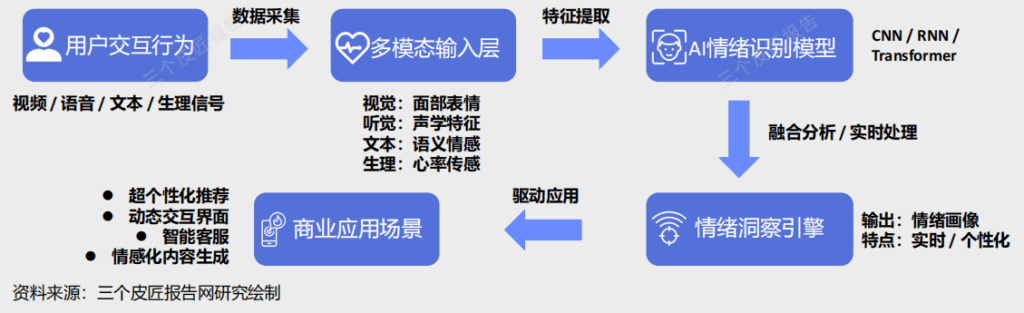
AI is becoming a core driver of emotional consumption by enabling real-time, personalised emotional understanding.
How AI Enhances Emotional Consumption
- Multimodal emotional recognitionintegrates visual, audio, text, and physiological signals.
- Model architectures like CNN, RNN, and Transformerssupport real-time emotional analysis.
- Outputs include emotional tagsand personalised insights.
(Screenshot extracted from an industry report)
2.4 How E-commerce and Social Platforms Drive Emotional Consumption
A. E-commerce Platforms (Taobao / JD.com)
How they drive emotional consumption:
- Data-driven emotional profiling:User browsing patterns, search behavior, and dwell time are translated into emotional signals.
- Scenario-based recommendations:Late-night comfort-food suggestions, seasonal “healing” category pushes, and mood-based shopping prompts.
- Intelligent emotional commerce:AI-powered product recommendations that align with users’ emotional states for higher relevance and conversion.
B. Social Media Platforms (Douyin / Kuaishou)
How they amplify emotional consumption:
- Emotion-based content recommendations:Video visuals, background music, captions, and comments are analysed to identify emotional cues.
- Community-driven emotional resonance:Comment sections and interactions evolve into emotion-led micro-communities.
- Interest-driven commerce loops:Short video content triggers emotion → sparks interest → leads directly to purchase, significantly shortening the conversion path.
3.0 Industry Landscape: China’s Emotional Consumption Segments
China’s emotional consumption market spans multiple fast-growing sectors, each driven by different emotional needs such as healing, self-reward, entertainment, and identity expression. Key tracks include beauty & personal care, food & beverage, wellness, pet economy, entertainment/IP culture, and lifestyle experiences. T
3.1 Key Sector: The Pet Economy — Emotional Companionship & Family Expansion
The rise of China’s pet economy reflects consumers’ shift from fulfilling basic pet care needs to seeking emotional companionship, responsibility, and unconditional love—treating pets as “family members.”
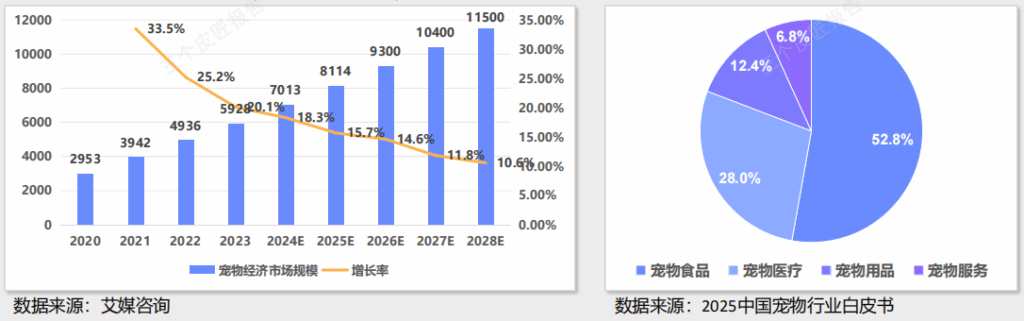
Market Growth
- Market size grew from ¥2953B (2020)to an estimated ¥11,500B (2028).
- CAGR exceeds 10%, showing strong emotional-driven spending power.
Consumption Structure
- Pet food (52.8%)and pet healthcare (26%) dominate the market.
- Spending is moving from basic survival needs to health securityand emotional wellbeing.
(Screenshot extracted from an industry report)
3.2 Key Sector: The Designer Toy Economy — Emotional Projection & Social Currency
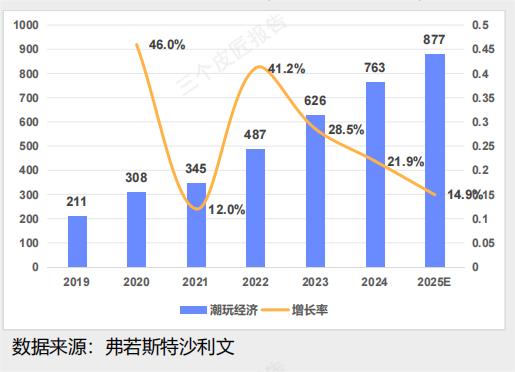
China’s designer toy economy is fundamentally driven by emotional projection, identity expression, and social currency. Collecting is not only about owning the item, but about fulfilling emotional needs and signalling belonging within fan communities.
Market Growth
- The market expanded from ~¥21B (2019)to an expected ¥90B by 2025.
- Average annual growth exceeds 30%, reflecting consumers’ strong desire for emotional joy and collection satisfaction.
Emotional Flywheel Model
Designer toy consumption follows a self-reinforcing emotional loop:
- Emotional Entry– emotional value, identity, belonging triggers the first purchase
- Consumption Conversion– impulsive purchases drive repeated buying
- Emotional Capitalisation– scarcity & collection desire increase perceived value
- Value Sedimentation– communities deepen loyalty & brand stickiness
(Screenshot extracted from an industry report)
3.3 Key Sector: The Healing Economy — External Solutions for Internal Pressure
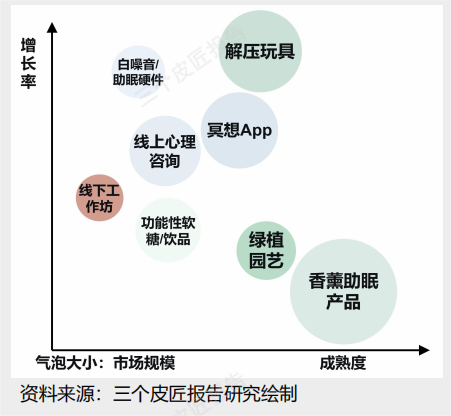
China’s healing economy has expanded into a trillion-RMB market, driven by rising urban stress and the growing need for emotional relief among young professionals.
The market splits into two major directions:
- Instant emotional relief:sleep aids, aroma products, stress-relief gadgets, sound therapy
- Systematic psychological support:online counselling, therapy apps, offline wellness programs
Core users are urban white-collar workers dealing with:
- High work intensity
- Sleep disorders
- Strong online consumption habits
- Increased focus on self-care
(Screenshot extracted from an industry report)
4.0 Market Outlook & Brand Strategy
China’s emotional consumption market will continue expanding as consumers increasingly prioritise emotional value over functional benefits. Brands need to shift from product-led competition to emotion-led value creation, building long-term emotional relationships with users.
A. Strategic Positioning: Anchor Emotional Value
- Treat emotional value as the brand’s core strategic asset.
- Concentrate on 1–2 primary emotional themes(healing, reward, identity) to maintain clarity and differentiation.
B. Product & Marketing: Scenario Innovation + Emotional Storytelling
- Develop offerings around key emotional needs: healing, motivation, belonging.
- Design immersive emotional scenarios (healing spaces, rituals, virtualcompanionship).
- Strengthen emotional storytelling through short-form video, communities, and IP partnerships.
C. User Relationship: Long-term Emotional Companionship
- Build an “emotional membership model”to extend user lifetime value.
- Leverage AI + emotional intelligence to deliver personalised emotional touchpoints.
- Cultivate emotional communities to reinforce identity and deepen loyalty.
Looking to Build an Emotion-Driven Brand Strategy?
At OctoPlus Media, we help brands design emotion-led positioning, build scenario-driven marketing, and develop long-term user engagement ecosystems.
Contact us to create a brand experience that truly connects with consumers—emotionally and meaningfully.
Feel free to talk to us
It’s a team with one single shared goal, which is our client’s success. Deliver results for your business now.