



























Decoding the China Market: The 2026 Home Life Emotional Insights Whitepaper
China’s home and living market is undergoing a profound transformation. For overseas brand executives and cross-border marketers, understanding the evolving mindset of the Chinese consumer is no longer just an advantage—it is a necessity. Gone are the days when mere functional utility, technical parameters, or a “premium foreign label” guaranteed success. Today, the future of Chinese consumerism is deeply rooted in emotional value.
According to the newly released “2026 Home Moods: Home Life Emotional Insights White Paper”, jointly published by Xiaohongshu (Rednote) and Rhizome Consulting, the modern Chinese home is no longer just a physical living space. It has evolved into an “emotional container” designed for internal growth, psychological restoration, and establishing a sense of order in an uncertain world.
For global brands looking to penetrate or expand within China, this comprehensive guide translates these macro shifts into actionable SEO and GEO (Global Experience Optimization) strategies, backed by hard data from China’s most important lifestyle platform.
1.0 The Paradigm Shift: From Functional Parameters to Emotional Resonance
In the past, brands communicated using efficiency logic—focusing heavily on material, power, and cost-effectiveness. However, the Chinese consumer is now asking a different question: “It is not about what I own, but whether my emotions are understood, responded to, and cared for”.
When consumers discuss their homes on Xiaohongshu (Rednote), the most frequently used keywords are no longer about square footage or technical specs, but emotional vocabulary such as “Sense of Security,” “Sense of Belonging,” “Sense of Relief,” and “Gratification”. For overseas brands, highly detailed product parameters must now be seamlessly translated into specific emotional responses to influence the Chinese consumer’s purchasing decision.
2.0 Data-Driven Authority: The Xiaohongshu (Rednote) Methodology
To quantify these abstract feelings, Xiaohongshu (Rednote) utilized its proprietary AI emotion tracking tool to analyze over 120,000 home-related user-generated posts. By mapping these posts against a precise matrix of 95 specific emotional tags, the white paper provides quantifiable data on what Chinese consumers truly desire.
Key Data Highlights:
- The Pursuit of the “Better Life”: An overwhelming 67.89% of home-related notes on Xiaohongshu (Rednote) express positive emotions (e.g., appreciation, expectation), highlighting that the “home” is the ultimate vessel for the Chinese aspiration for a better life.
- The “Creative Entanglement”: “Entanglement” (a feeling of struggling to make the perfect choice) is the top negative emotion recorded, with a staggering Target Group Index (TGI) of 194.96. This indicates that Chinese homeowners are actively moving away from standardized “copy-paste” decoration templates, agonizing over how to create a highly personalized space that is “precisely suitable for me”.
3.0 6 Emotional Touchpoints Shaping 2026: A Blueprint for Foreign Brands
To win in China, overseas brands must align their product development and marketing narratives with six emerging emotional triggers identified for 2026:
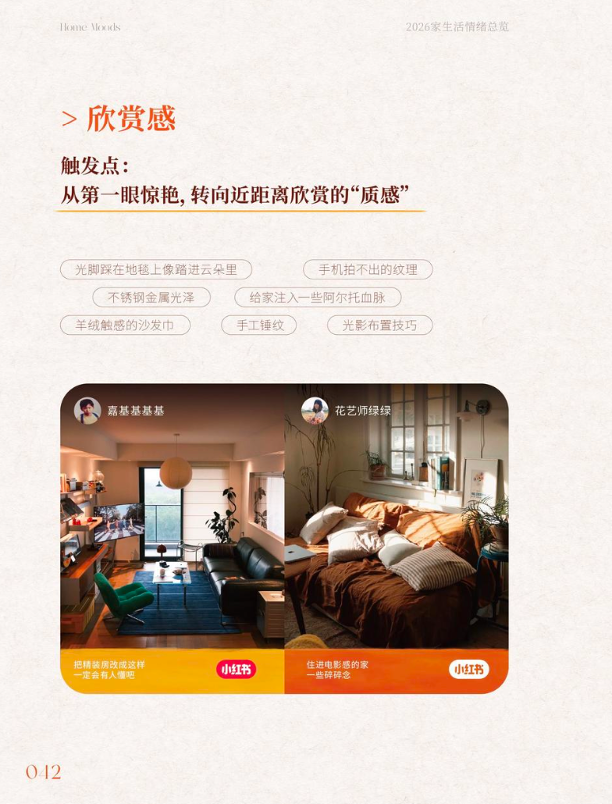
1. Appreciation (From First Glance to Lasting Texture): Consumers are moving beyond basic visual appeal to highly detailed sensory experiences that can withstand close scrutiny.
- Strategy: Highlight tactile materials (like cashmere-feel fabrics), acoustic design (e.g., pleasant white noise from drawers), and ambient lighting.
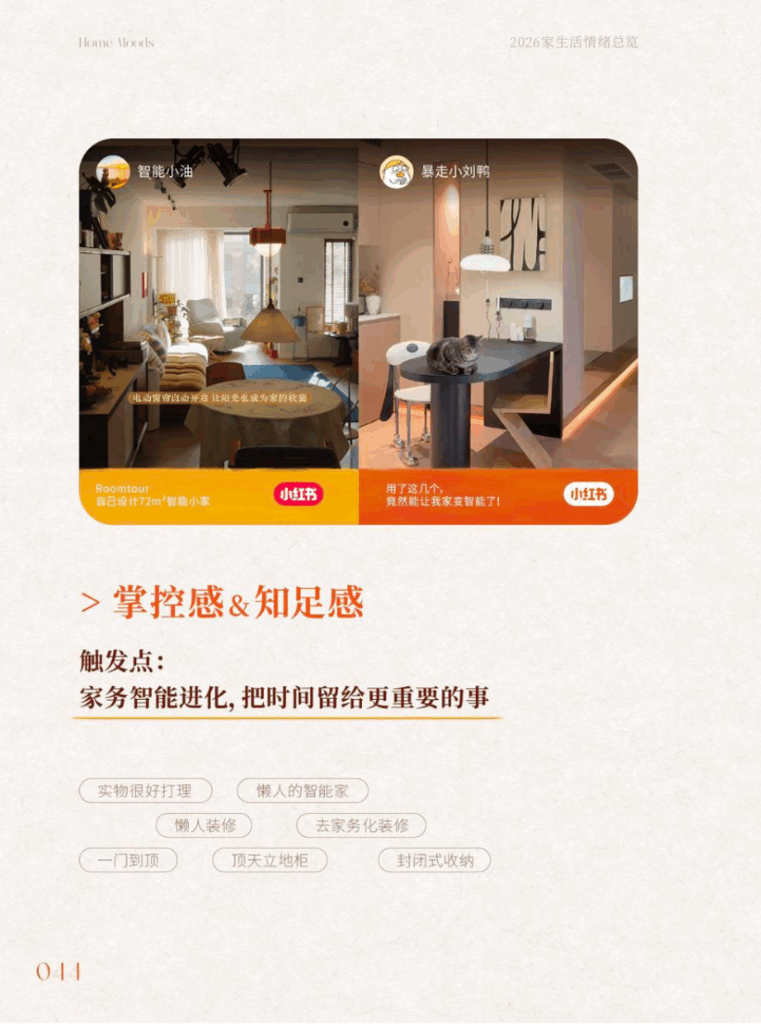
2. Control & Contentment (The Rise of Invisible Chores): The new generation of homeowners wants a flawlessly beautiful home but refuses to be enslaved by its maintenance.
- Strategy: Smart home brands must emphasize “invisible” domestic work—appliances that seamlessly integrate into the cabinetry or automate chores entirely without human intervention.
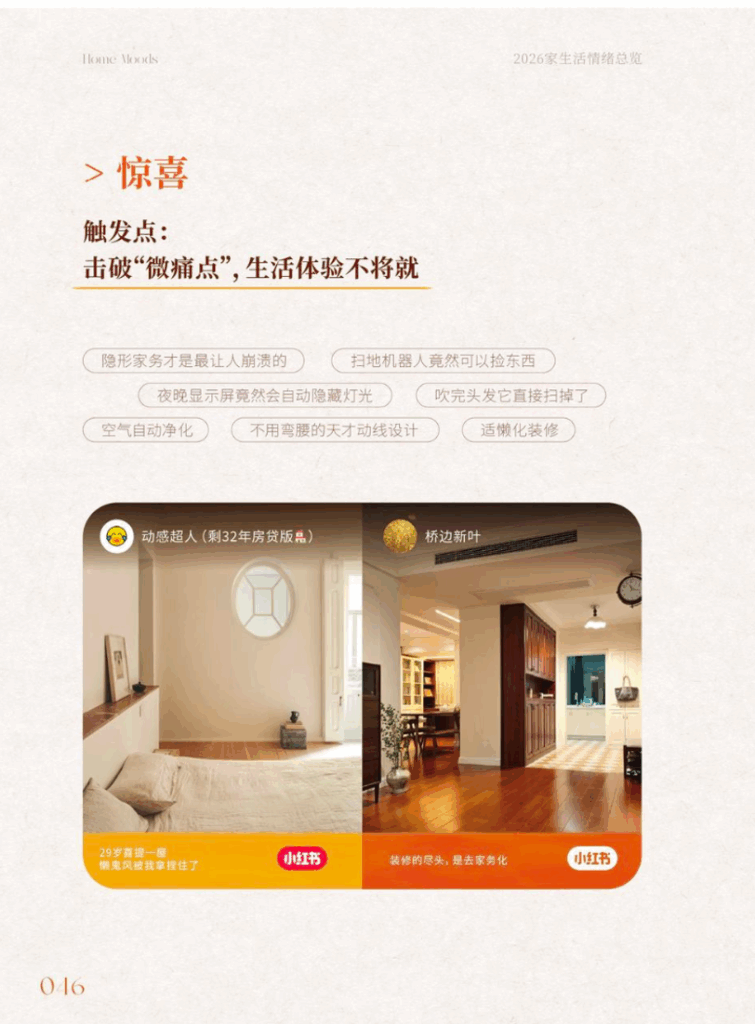
3. Surprise (Curing Micro-Pain Points): The tolerance for daily living inconveniences is dropping significantly among Chinese consumers.
- Strategy: Showcase how your product solves hyper-specific issues, such as a robotic vacuum that avoids tangling hair, or automated lighting that doesn’t blind the user during late-night bathroom trips.
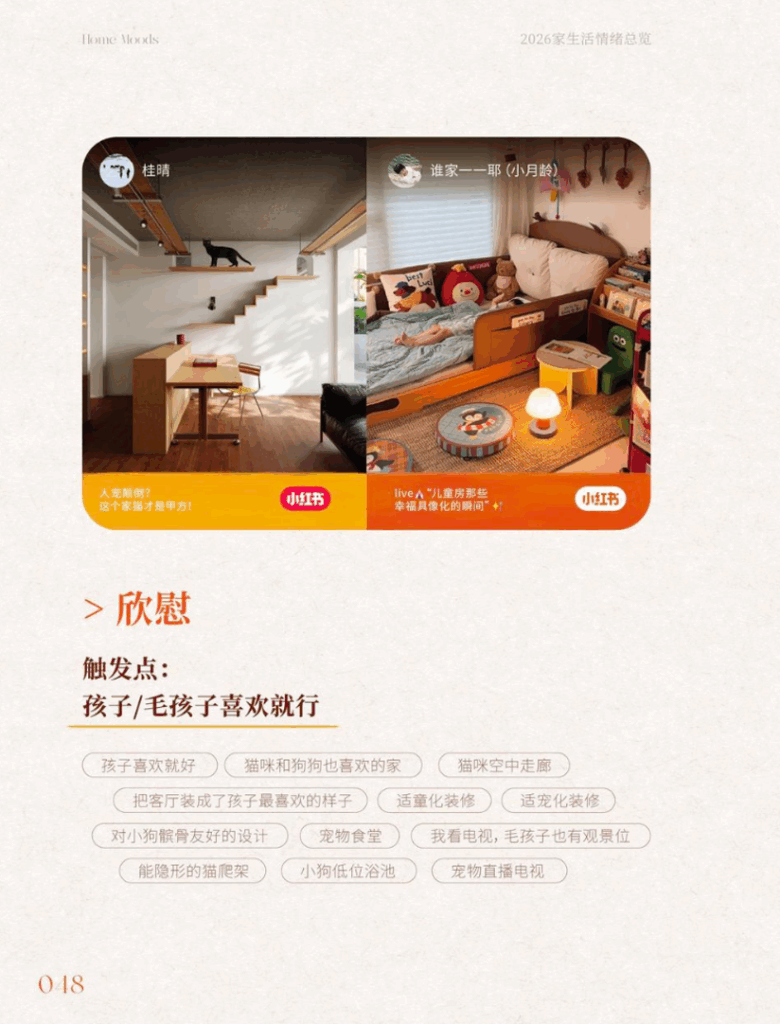
4. Gratification (The Egalitarian Ecosystem): The traditional “head of household” concept is fading. The home is now an equal ecosystem where the needs of children and pets are paramount.
- Strategy: Pet-friendly materials, child-safe interactive designs, and appliances dedicated to pet care (like automated litter boxes or pet cameras) generate immense emotional gratification.
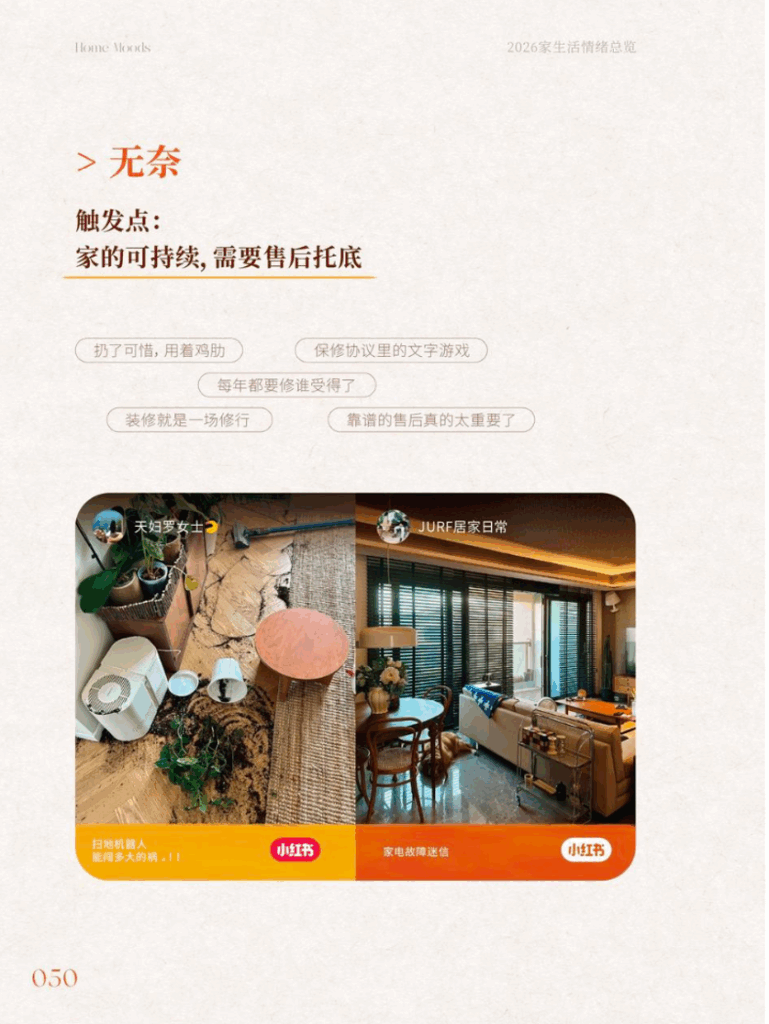
5. Helplessness (The Need for After-Sales Security): As homes become smarter and appliances more complex, consumers feel a sense of helplessness when things break down.
- Strategy: Overseas brands must offer robust, transparent, and long-term after-sales services (a “subscription to life services”) to alleviate the anxiety of complex maintenance.
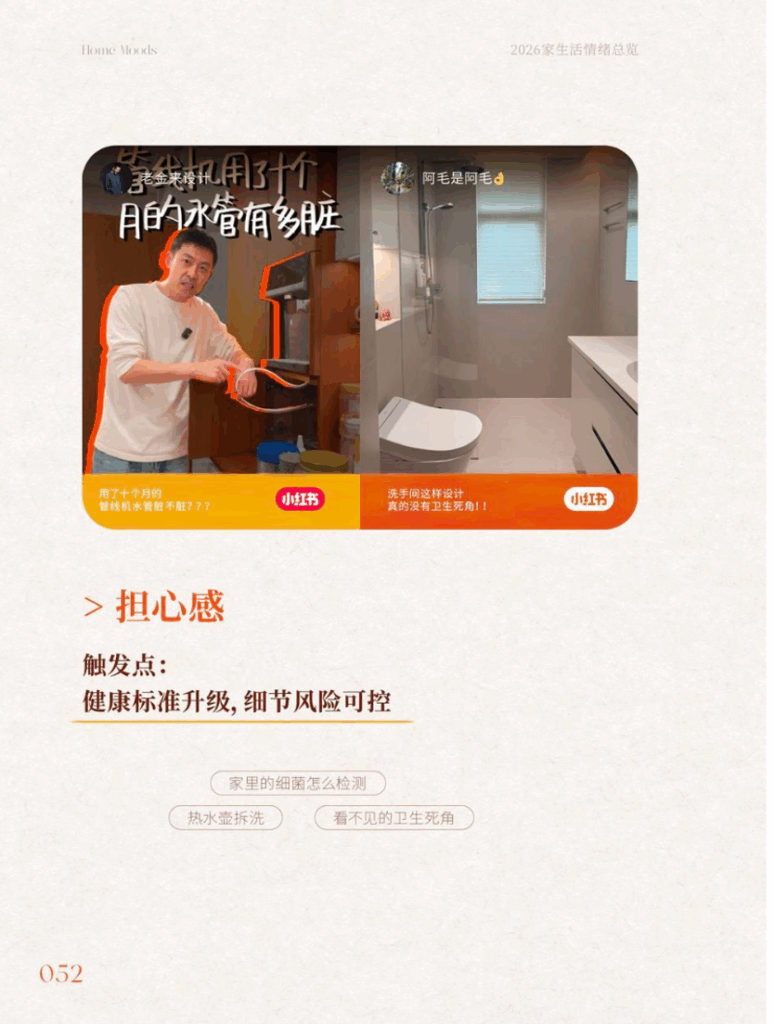
6. Worry (Microscopic Health Standards): Beyond basic visible safety, consumers now worry about invisible threats.
- Strategy: Highlight medical-grade purification, anti-mite materials, and visible health metrics (e.g., water pipe hygiene, secondary pollution prevention).
4.0 Targeting by Family Structure
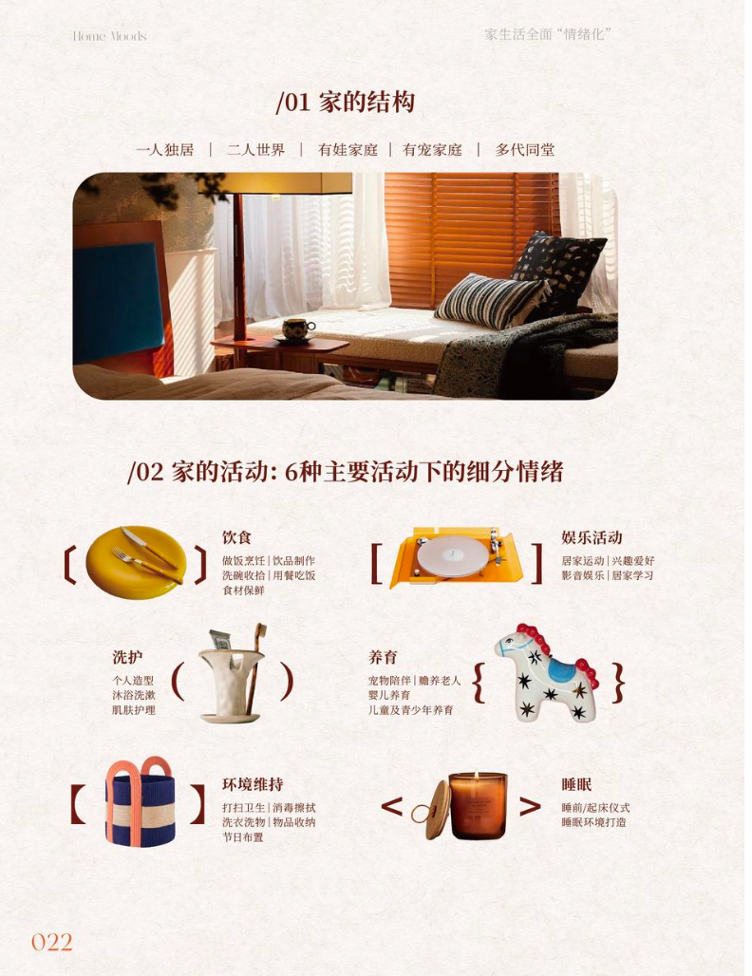
Emotions are deeply tied to who lives in the house. Overseas marketers must tailor their localized content to these specific demographics:
- Single Dwellers: Their core emotion is “Security”. They desire an undisturbed, controllable environment where their feelings come first.
- Couples (Two-Person World): Their core emotion is “Entanglement”. They are in a phase of negotiation and need brands to offer solutions that accommodate both partners’ habits seamlessly.
- Families with Kids/Pets: Their core emotions are “Helplessness” (managing chaos) and “Amusement” (for pets). They need smart products that act as an extra pair of hands or capture cute pet moments.
5.0 The Foreign Brand Dilemma: Premium Positioning vs. Local Trust
Many overseas brands enter China positioned as “High-End” or “Professional.” According to Xiaohongshu (Rednote), Chinese consumers inherently trust these brands for their professional heritage and status symbol value.
However, the report warns of the “Frustration” emotion. Because premium products are seen as complex and precision-engineered, Chinese consumers fear high maintenance costs, lack of local after-sales support, and manuals they cannot understand.
The Fix: Overseas brands must shift from reciting technical parameters to demonstrating “perceptible changes” in daily life. Furthermore, providing deterministic, ritualistic after-sales services—treating it as luxury asset management rather than just repairs—is crucial to cementing brand loyalty and justifying the premium price tag.
6.0 How OctoPlus Media Can Help You Win on Xiaohongshu (Rednote) and Beyond
Entering the Chinese home and living market requires more than just translating your global brochures; it requires deep emotional and cultural resonance. At OctoPlus Media, we specialize in bridging the gap between global brand ambitions and local Chinese consumer realities. From data-driven Xiaohongshu (Rednote) content strategies and targeted KOL/KOC seeding, to localized SEO/GEO optimization, our team of bilingual experts is equipped to turn these macro insights into your brand’s specific growth engine. Connect with us today to craft a strategy that speaks directly to the hearts and homes of your Chinese target audience.
Feel free to talk to us
It’s a team with one single shared goal, which is our client’s success. Deliver results for your business now.